AEO Strategy 2026: Dominating AI Answer Engines
Master AEO and AI search trends for 2026. Learn how to optimize for Perplexity, SearchGPT, and Digital Product Passports. Stay ahead—read our expert guide now!
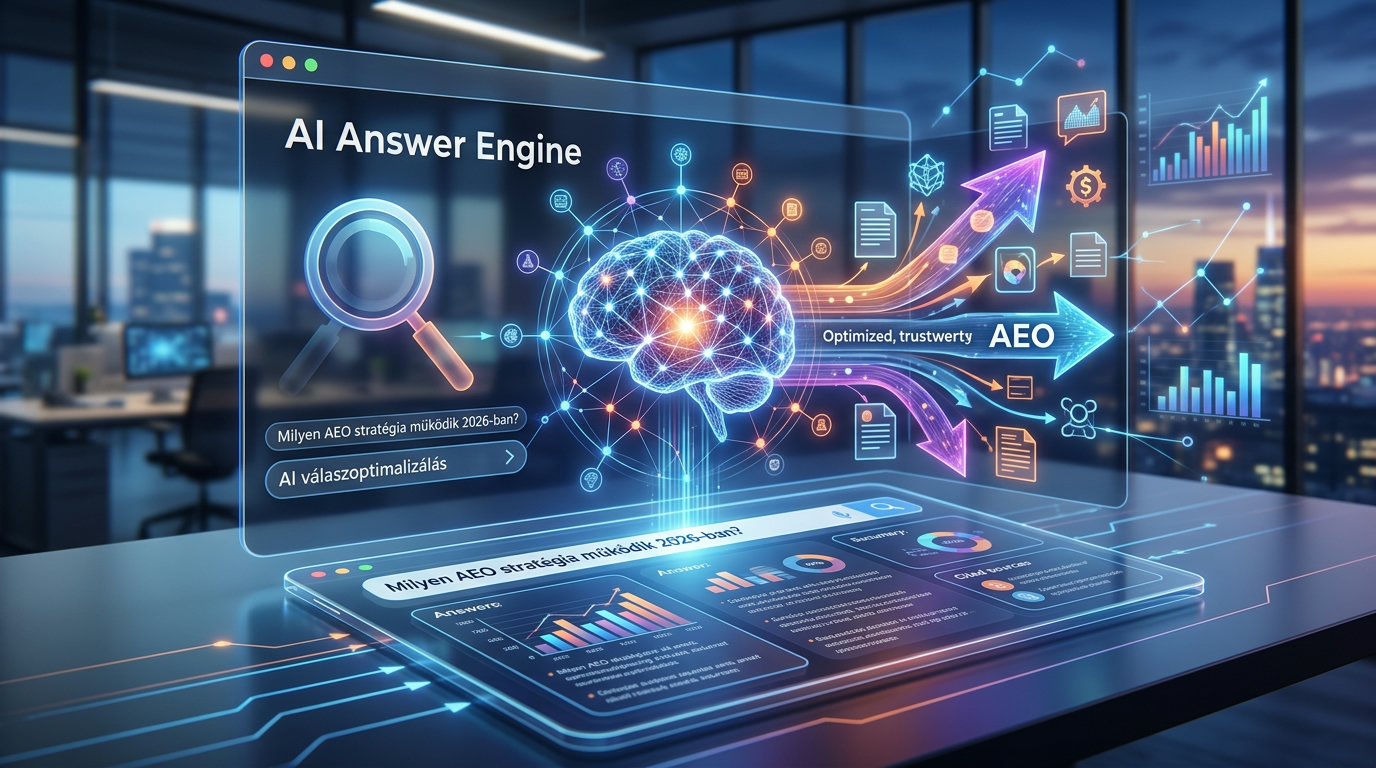
The End of Blue Links: Why We No Longer "Search" on Google
Remember the era of scrolling through ten blue links? By 2026, that experience has become technological nostalgia. Users no longer want to browse; they want immediate, synthesized answers. we have entered the age of AEO (Answer Engine Optimization), where the goal is no longer just ranking, but becoming the definitive source for AI-generated responses. If your brand isn't part of the AI agent's narrative, you effectively don't exist. This isn't a gradual shift; it's a brutal market restructuring led by Perplexity, SearchGPT, and Claude. Those still obsessing over keyword density are simply rearranging deck chairs on the Titanic.
1. AEO Dominance: The New Metric of Visibility
Recent data indicates that 'zero-click searches' have surpassed 75%. Why? Because AI models are now sophisticated enough to summarize your content without a visitor ever clicking through to your site. Your 2026 strategy? Become the authority that the AI cites as its primary source. This isn't about meta tags; it's about structured data and semantic relevance. AI doesn't look for words; it looks for relationships. If your website lacks clear, machine-readable answers to user queries, you remain invisible.
The role of visual content has also transformed. AI-driven search engines now extract deep information from images and videos. In this competitive landscape, high-quality visual presentation is non-negotiable. Tools like ISI Studio enable brands to generate high-fidelity, AI-optimized visual assets that help algorithms contextualize content instantly. The marketer of the future doesn't just write articles; they build a knowledge base for AI consumption.
2. DPP: Your Product’s Digital DNA
Driven by European Union regulations, the DPP (Digital Product Passport) has become an essential component of physical goods by 2026. This is more than a QR code on a box; it is a full lifecycle tracker detailing raw material origins, carbon footprints, and recyclability. Consumers, particularly within Reddit’s 'anti-consumption' and 'buy-it-for-life' communities, have moved past marketing slogans. They demand data. Transparency is no longer an option—it is the price of admission. Companies that implement early DPP strategies are building trust capital that no advertising campaign can replicate.
3. Verified Human Brand: The Premium on Authenticity
As the internet becomes saturated with infinite synthetic AI content, a powerful counter-movement has emerged on platforms like TikTok and Instagram. We are seeing the rise of 'Human Fatigue.' Users are hungry for imperfection, raw footage, and genuine human error. In 2026, the most valuable currency is verification. 'Verified Human' brands are those unafraid to show the friction of the production process or the reality of their failures. It is a contrarian approach: while everyone else automates with AI, you must invest in human presence. Use AI in the background—utilizing ISI Studio to rapidly test creative concepts—but ensure your face and voice remain unmistakably real.
4. Edge AI and the Privacy Renaissance
The era of massive Cloud AI models has paved the way for Edge AI (artificial intelligence running locally on devices). Why? Because organizations and individuals have realized that their data is their most valuable asset. In 2026, the foundation of digital strategy is 'Data Sovereignty.' Forward-thinking companies are running closed-circuit LLMs (Large Language Models) that prevent data leakage. For consultants, the greatest opportunity lies in helping SMEs build their own local AI infrastructure. This is where high-level technology meets cybersecurity.
5. Bio-Integrated Wellness: Marketing in the Bloodstream
Look at the App Store rankings or Amazon's Best Sellers: biometric sensors are ubiquitous. By 2026, marketing is no longer based on demographics, but on biological states. 'Feeling fatigued? Here is a decaf recommendation.' 'High stress levels? Here is a calming playlist.' While this level of personalization may seem invasive, convenience has historically triumphed over privacy concerns. Brands must develop API-based solutions capable of interacting with wearable data, strictly within ethical frameworks.
Low-Budget and Scalable Opportunities
- Low-budget Entry: Launch an AEO Audit agency. All it requires is a deep understanding of how Perplexity indexes content. Use existing tools to verify structured data for clients.
- High-scale Growth: Build a decentralized DPP platform on blockchain, allowing thousands of European manufacturers to maintain regulatory compliance through a single subscription model.
- Underground Trend: Off-Grid Digital Luxury. In 2026, the ultimate luxury is the absence of signal and algorithms. Hotels and services operating as Faraday cages, guaranteeing digital silence, will command premium prices.
Conclusion: Adaptation is the Only Survival
2026 is not just about technological advancement; it is about a new social contract between humans and machines. A successful strategy rests on two pillars: be visible to the AI (AEO), but remain irreplaceable to the human (Authenticity). Remember, AI is a tool—leverage platforms like ISI Studio to scale your efficiency, but never delegate your strategic direction or human empathy to an algorithm. The future belongs to those who understand the code but feel the heartbeat.
Glossary
- AEO (Answer Engine Optimization)
- The process of structuring content so that AI-based search engines use it as a direct answer for users.
- API (Application Programming Interface)
- A set of rules allowing different software applications to communicate with each other.
- DPP (Digital Product Passport)
- A digital certificate containing a product's full lifecycle and sustainability data.
- Edge AI
- Artificial intelligence that runs locally on a device (e.g., phone or server) without requiring constant cloud connectivity.
- LLM (Large Language Model)
- An AI model, such as GPT-4, trained to understand and generate human language.
- RAG (Retrieval-Augmented Generation)
- A technique that allows AI models to pull from external, up-to-date data sources to improve accuracy.