Reclaim Your Digital Peace: The Rise of AI Ad Blockers
Explore the future of digital wellbeing and AI ad blockers. Learn how to combat manipulative AI ads and build a business around digital sanity. Read more!
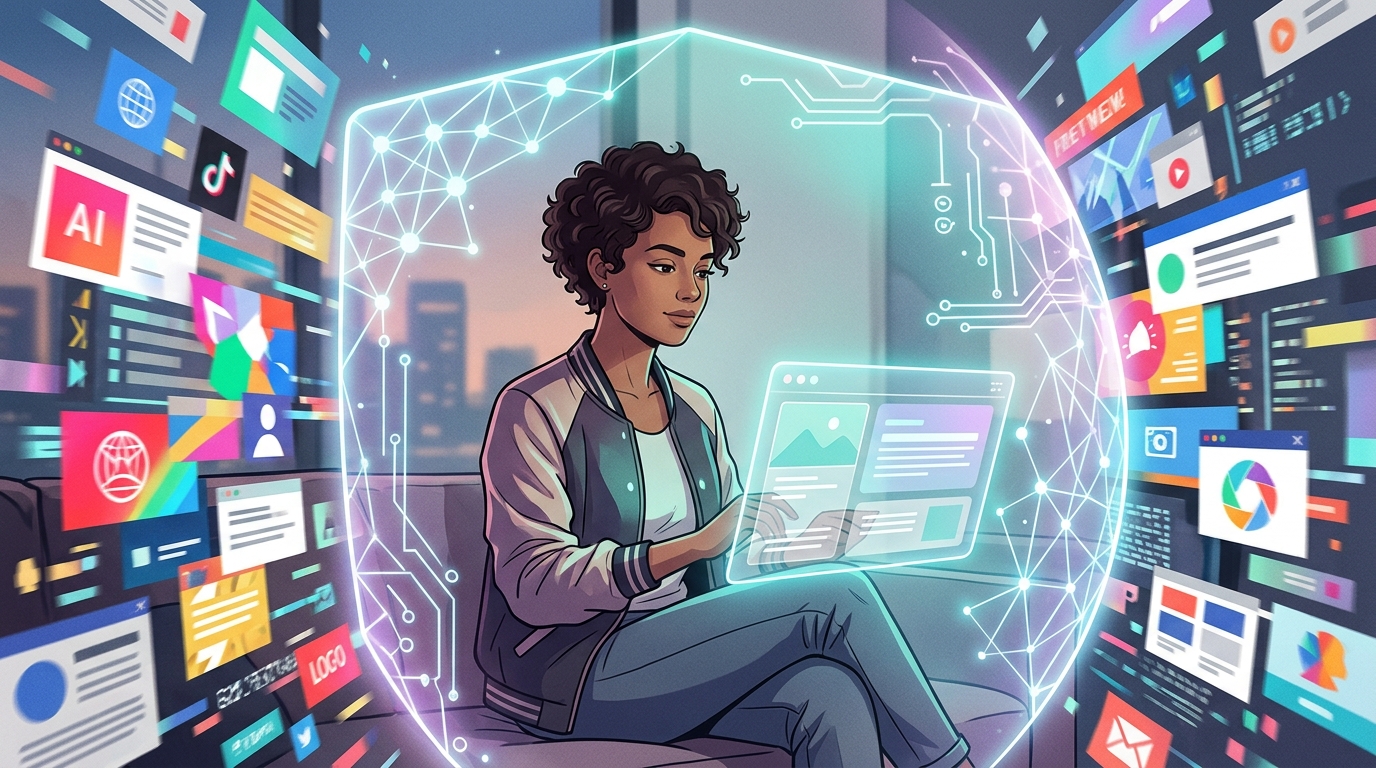
How many times today has an algorithm attempted to sell you your own subconscious desires? This isn't a scene from a dystopian thriller; it is the reality of the modern web. Advertising algorithms no longer just track your search history—they use generative AI to create predictive visual and textual stimuli designed to bypass your psychological defenses. As digital noise reaches a breaking point, a new arms race has begun: Digital Wellbeing 2.0, powered by AI-driven ad blockers.
The Twilight of the Attention Economy
We’ve been told for a decade that data is the new oil. If that is true, then our attention is the refined fuel that tech giants burn to power their growth charts. But there is a shift occurring. Users—particularly Gen Z and Millennials—are developing an immunity to classic "personalized" ads that feel more like "creepy profiling." In this landscape, the flood of AI-generated content has arrived: synthetic faces making eye contact, pitching products an algorithm decided you need. This is no longer just advertising; it’s a cognitive siege. According to Google Trends, searches for "AI ad blocking" and "digital detox tools" have reached record highs. Users aren't looking for less internet; they are looking for a cleaner one, where content and commercial propaganda are clearly delineated.
Why AI-Generated Ads are Crossing the Line
Traditional ads were manageable. A banner on a sidebar was like a billboard: it was there, we saw it, and we categorized it. AI-generated ads are different. Utilizing Large Language Models (LLMs), these ads craft messages that mimic the tone of a friend or a trusted journalist. When the line between content and commerce blurs, users feel manipulated. While platforms like media.isi.studio empower creators to produce stunning visual content within ethical frameworks, the darker side of the industry uses this same tech for exploitation. The integration of Deepfakes—synthetic media where faces or voices are replaced—into advertising has been the final straw. No one wants to browse a world where every second video features an AI-generated celebrity pitching questionable supplements.
Digital Wellbeing 2.0: Silence as the New Luxury
The first wave of digital wellbeing focused on screen time limits and "Do Not Disturb" modes. It wasn't enough. Digital Wellbeing 2.0 is about active filtering and intelligent environment curation. These new tools don't just hide ads; they use Natural Language Processing (NLP) to analyze site content, allowing only high-value information to pass through. Tech-savvy users are no longer fighting technology; they are using technology to prune its own excess. For them, silence isn't about disconnecting—it's about a filter layer that restores control. A high-quality AI blocker is like noise-canceling headphones for your eyes, removing visual white noise so you can focus on why you opened the browser in the first place.
The Business Case: Monetizing the Resistance
There is immense market potential here. In the attention economy, people are willing to pay for peace. A browser extension or a dedicated app that transforms the web into an "AI-free zone" is a potential goldmine. The model is straightforward: a freemium version that blocks known AI ad networks, and a premium tier offering advanced features. These could include real-time Deepfake detection or a "Zen Mode" that unifies typography and removes flickering elements to reduce cognitive load. The ROI for such software isn't just measured in revenue, but in user loyalty. With development costs relatively low when leveraging existing AI models, the demand is massive—as seen in thriving communities like Reddit’s r/privacy.
The Tech Race: Stopping AI with AI
How does this work in practice? Traditional blockers rely on blacklists; if a URL is listed, it’s blocked. But AI ads are dynamic, using unique code and shifting URLs. This is where computer vision and text analysis come in. An AI-based blocker doesn't look at the address; it looks at the content. It recognizes the patterns of synthetic imagery and analyzes promotional intent. This nuanced approach is critical—it prevents the demonetization of small, high-value creators while filtering out the "synthetic trash" of industrial-scale ad factories. The future of content creation is about transparency and value, a standard upheld by tools found at isi.studio.
The Ethical Dilemma: Who Pays for the Free Web?
Will the free internet collapse if everyone uses AI blockers? That is a valid, if exaggerated, concern. In reality, we are witnessing a market correction. Advertisers will be forced to return to quality over quantity. Businesses looking to build genuine communities will focus on high-end visual storytelling—utilizing the AI generation capabilities of media.isi.studio ethically—rather than hiding behind manipulative algorithms. The future belongs to the ad that you don’t want to block because it is useful, beautiful, or inspiring. Until that paradigm shift is complete, AI ad blockers will remain the most essential tools for digital self-defense. Are you ready to take back control of your attention, or will you let an algorithm decide what you see next?
Glossary
- NLP (Natural Language Processing)
- The field of AI focused on the interaction between computers and human language.
- LLM (Large Language Model)
- AI trained on massive datasets to understand and generate human-like text.
- UX (User Experience)
- The overall experience and feeling a user has when interacting with a product.
- Deepfake
- Synthetic media where AI replaces a person's likeness or voice with high precision.
- ROI (Return on Investment)
- A performance measure used to evaluate the efficiency of an investment.
- CTR (Click-Through Rate)
- The ratio of users who click on a specific link to the number of total users who view it.
- SaaS (Software as a Service)
- A software licensing model where applications are hosted centrally and offered via subscription.
- API (Application Programming Interface)
- A set of protocols that allow different software applications to communicate.