AI for ADHD and Autism: Empowering Neurodivergent Learners
Discover how AI helps neurodivergent children with visual schedules, gamification, and the FocusBuddy concept. Learn how to transform special education today!
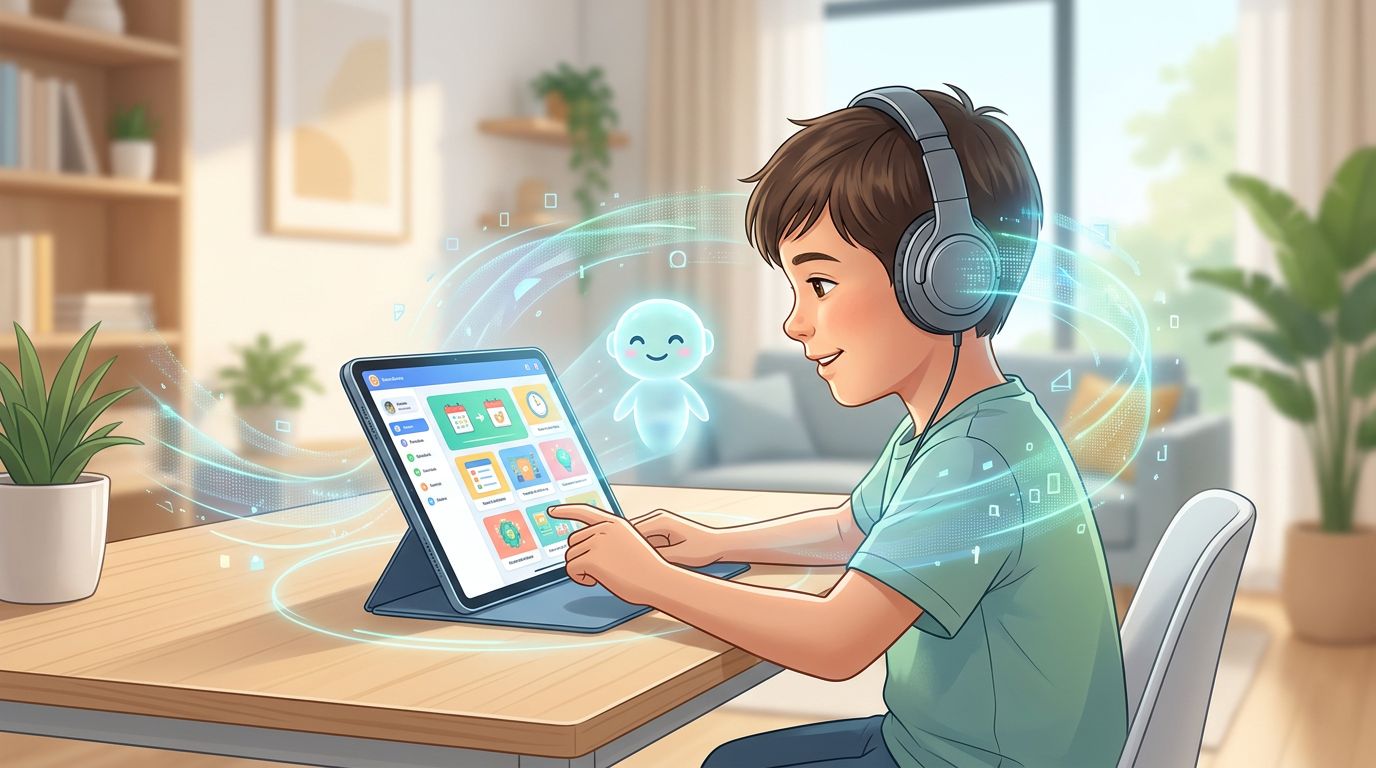
Imagine a morning that doesn’t feel like a battlefield. No pleading for tooth-brushing, no math notebooks vanishing into the fifth dimension, and no sensory meltdowns over the seam of a sock. For parents of neurodivergent children—those with ADHD, Autism, or other neurological differences—this isn't just a dream; it’s a necessity for survival. In the past 90 days, a shift has occurred across communities on Reddit and TikTok: parents have discovered that AI (Artificial Intelligence) is no longer a futuristic concept, but the most vital support tool of the present.
Breaking Down Invisible Walls: Why AI, Why Now?
Why is this trend exploding now? The answer is simple: AI has finally become sophisticated enough not just to answer, but to structure. For children with ADHD (Attention Deficit Hyperactivity Disorder), the greatest hurdle is often a deficit in Executive Function—the brain's self-regulation system responsible for planning and focus. In a world where every stimulus screams for attention, AI acts as a sophisticated noise filter.
According to Google Trends, searches for “AI for ADHD kids” have reached record highs. Parents are realizing that tools like ChatGPT or Claude can do more than write essays; they can take an overwhelming, monolithic task like “Clean your room” and break it down into 15 manageable, visually digestible micro-steps. Crucially, the machine possesses infinite patience. It doesn’t sigh, it doesn’t get frustrated, and it never judges.
FocusBuddy: Gamification That Actually Works
Consider a specific business concept currently filling a massive void in the market: FocusBuddy. This is more than a calendar; it’s an interactive AI avatar powered by Gamification—the application of game-design elements in non-game contexts to boost motivation. Instead of a chore, the child receives a “mission.” The AI analyzes the child’s emotional state based on their responses; if it detects rising frustration, it pivots instantly: “Hey, I see this is getting tough. Let’s take a 2-minute break and find something blue in the room!”
The market potential is immense. Parents of neurodivergent children are “hardcore” consumers: they aren’t looking for luxury goods, but for solutions to daily crises. A well-structured, subscription-based AI assistant that integrates with family calendars is invaluable. The technology exists, the software is scalable, and the target audience is hungry for specialized support.
Visual Support: When an Image Is Worth a Thousand Words
Many neurodivergent children are visual learners. For them, a text-based list is just a swarm of black ants on a page. This is where modern visual generation changes the game. Creating visual schedules used to take parents hours (printing, laminating, cutting). Today, a single prompt can generate custom icons or video guides in a child’s favorite art style. If a child loves 3D animation, why not have a Pixar-quality character demonstrate how to brush their teeth? Platforms like media.isi.studio allow parents and educators to create professional, engaging visual aids in minutes, ensuring the child remains captivated and informed.
Emotional Regulation as a Business Opportunity
AI’s utility extends far beyond math homework. The most exciting developments are happening in emotional regulation. LLM-based (Large Language Model) bots are now being used to write “Social Stories.” If a child is anxious about a doctor’s visit, the AI crafts a story where the child is the superhero, explaining the process step-by-step to reduce the fear of the unknown.
This sector is highly attractive to investors due to the potential for “Quick Build” solutions. One doesn’t need to build a neural network from scratch; fine-tuning existing models (like GPT-4) with specialized datasets—such as pedagogical protocols—can result in a market-leading product. The FocusBuddy concept thrives on this: the technological layer is accessible, while the pedagogical and psychological value added is immense.
The Educator’s New Best Friend
It is a misconception that AI will replace specialists. On the contrary, it liberates them. Today’s special education teachers spend up to 40% of their time on administration and writing Individualized Education Programs (IEPs). AI can draft these documents based on observations in seconds. This leaves the teacher with what they do best: human connection, empathy, and actual teaching. Schools that integrate AI into special education first will gain an insurmountable competitive advantage.
Skeptics may ask, “Won’t this isolate the child?” Experience suggests the opposite. By reducing daily friction and frustration, AI tools leave children with more mental energy for social interaction. When the “how do I start my homework” hurdle is removed, there is more capacity for friendship.
How to Get Started
Whether you are a parent or a developer, the time to act is now. The technology is available, often for free or at a low cost. Start small:
- Use AI to visually break down daily routines into micro-tasks.
- Ask AI to explain abstract concepts through the lens of the child’s special interests (e.g., Minecraft or dinosaurs).
- Utilize tools from media.isi.studio to transform dry curriculum into exciting, visual experiences.
Neurodiversity is not a bug; it is a different operating system. AI is the software update this operating system has been waiting for for decades. Entrepreneurs who recognize this will not only generate profit but change the quality of life for an entire generation. The question is no longer if AI helps, but whether you will be among those making that help accessible to everyone.
Remember: AI-supported learning is not “cheating”—it is educational equity. Innovative solutions like automated image and video production on the media.isi.studio platform are rewriting the rules of special education. It is time for technology to serve not just productivity, but inclusion.
Glossary
- ADHD
- Attention Deficit Hyperactivity Disorder.
- AI
- Artificial Intelligence.
- Executive Function
- The brain's self-regulation ability used for planning and focus.
- Gamification
- The use of game elements in non-gaming environments.
- IEP
- Individualized Education Program.
- LLM
- Large Language Model, the engine behind AI text generation.
- Neurodivergent
- Having a brain that functions or develops differently (e.g., Autism, ADHD).
- Prompt
- The instruction or text command given to an AI.