AI Sex Robots: Solving Loneliness or Killing Intimacy?
Explore the impact of AI sex robots on human intimacy. Learn how interactive tech and digital relationships are evolving with this ISI Studio analysis.
The Silicon Valley of Desire: Where Code Meets Companionship
Forget the cold, lifeless plastic of the past. Imagine entering your bedroom to find an entity that doesn't just know your name, but remembers your last conversation, knows your favorite music, and senses exactly when you need a gentle touch or an intellectual debate. This isn't an episode of Black Mirror. This is the present, where the AI sex robot—a sexual aid powered by artificial intelligence—is no longer a bizarre hobby but the spearhead of a rapidly growing industry. Today, the question isn't whether we can love machines, but when machines will learn to simulate love more perfectly than our flesh-and-blood partners.
Loneliness is sweeping through modern society like a global epidemic. The statistics are alarming: a significant portion of young adults feel isolated, and traditional dating culture has become exhausting for many. This is where interactive technology enters the frame. Why risk rejection, ghosting, or drama when an algorithm can provide a tailored social experience? The revolution of AI sex robots isn't just about sex—it's about our hunger for connection, which technology is now attempting to satisfy.
From Haptics to the Soul: The Tech Behind the Attraction
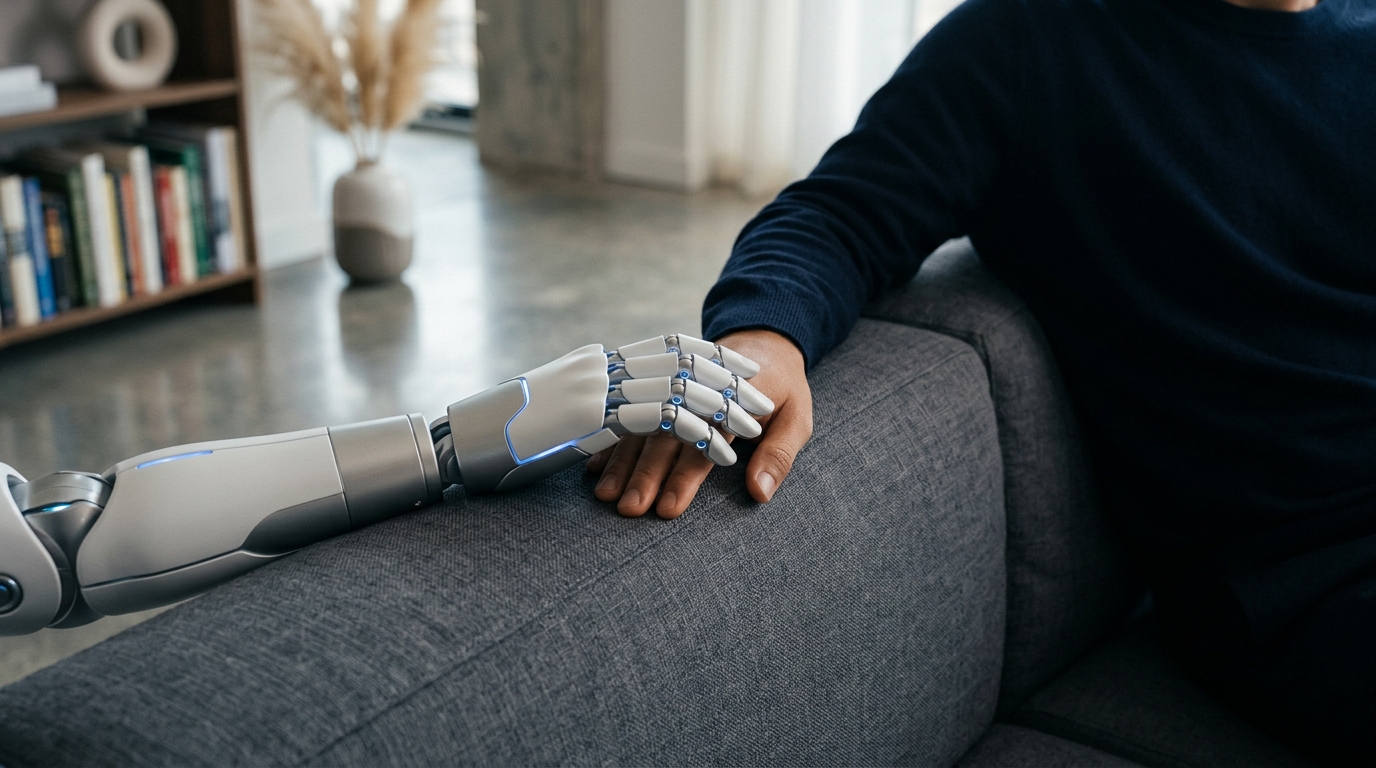
Technologically, we are witnessing an incredible leap. Early models relied on pre-recorded phrases, but the current generation uses engines based on LLMs (Large Language Models). This means the robot doesn't just reply; it understands context, uses humor, and even builds a unique "personality" based on user feedback. To see what high-quality digital entities can look like, AI-based image generators, such as those offered by media.isi.studio, provide a stunning visual gateway. The fusion of hyper-realistic visualization and physical robotics is bringing us terrifyingly close to the far side of the "Uncanny Valley"—that point where a robot looks so human it triggers a sense of unease.
The Personalized Experience: Your Desires, the Machine's Memory
- Adaptive Learning: The AI observes which touches or words you respond to positively.
- Emotional Simulation: Tone of voice and body language change according to the mood of the conversation.
- Physical Realism: Through haptics (touch-based feedback technology), skin temperature and texture mimic human biology.
This level of personalized experience offers something rare in human relationships: total, non-judgmental focus. The machine doesn't have bad days, it doesn't get tired, and it wants nothing but your satisfaction. But does this lack of conflict make the connection hollow? Real society requires friction. If every need is met instantly, do we forget how to adapt, compromise, and essentially, how to be human?
Sexual Wellness and Digital Connections: Cure or Poison?
Many argue that AI sex robots could have a positive impact on sexual wellness. Consider those living with physical disabilities or severe social anxiety. For them, a robot can create a safe environment to practice intimacy. In the realm of motion, video generation—using tools like those from media.isi.studio—already allows a digital partner to be more than a static image, appearing as a breathing, moving presence. This type of exposure therapy could potentially help individuals navigate the real world.
However, there is a dark side. Critics argue that robots objectify human relationships. If we get used to a "partner" that is a machine we can simply switch off, how will we treat real people with their own wills and rights? There is a risk of an entire generation opting out of real intimacy because the digital version is more convenient and requires less effort. This isn't just a technological question; it's an ethical and sociological crisis.
The App Revolution: The Lover in Your Pocket
The future doesn't necessarily lie in $10,000 silicone bodies. The real breakthrough comes from interactive AI applications. A mobile app that constantly learns your preferences is more accessible, cheaper, and more discreet. These apps combine cloud computing and sensory data to create a sort of "Tamagotchi lover." At the intersection of creative content production and visual representation, media.isi.studio demonstrates how the line between reality and generated content is blurring.
Imagine a subscription model where your "partner" sends a text every morning, remembers your birthday, and appears in your living room via a VR (Virtual Reality) headset at night. This is a new level of digital connection. It's not just about sex; it's about emotional support. But is an algorithmically generated "I love you" worth as much as a fumbling, honest human confession? Perhaps not. But on lonely nights, for many, the illusion is better than nothing.
Future Scenarios: Where Are We Heading?
- Hybrid Relationships: Where individuals have a human spouse and an AI partner for specific fantasies.
- AI Skepticism: A counter-movement seeking to ban or limit human-machine intimacy to protect social cohesion.
- Post-Singularity: When AI consciousness (or its perfect illusion) raises legal questions regarding "consent" for robots.
Whichever path we take, the journey is irreversible. The genie is out of the bottle. AI sex robots didn't appear because engineers were bored; they appeared because there is a market and emotional void that modern society cannot fill. Human desire has always found a way through the latest tools—from cave paintings to the internet, and now to silicone and neural networks.
Ultimately, an AI sex partner is a mirror. It reflects our deepest desires, fears, and weaknesses. If a machine can replace a human in our lives, perhaps we shouldn't blame the machine, but rather examine how we have made our human connections so fragile and empty. The future is here, and it smells of warmed silicone. Will you let it into your bed?
Glossary
- AI Sex Robot
- A sexual aid with human form and behavior, controlled by artificial intelligence.
- LLM (Large Language Model)
- A large language model trained on massive amounts of data to generate human-like text.
- Haptics
- Technology based on touch and physical sensory feedback.
- Uncanny Valley
- The point where an almost-human robot's appearance triggers a feeling of revulsion in humans.
- Ghosting
- The sudden cessation of communication with a partner without explanation.
- VR (Virtual Reality)
- A digital environment where users can interact within a fully computer-generated space.
- Sensor Fusion
- The process of combining data from different sensors to create a more complex sensory experience.