Data-Centric AI: Why Quality is the New Quantity
Explore the data-centric AI paradigm. Learn why quality data beats complex algorithms and how to improve your machine learning ROI. Read more at ISI Media Labor!
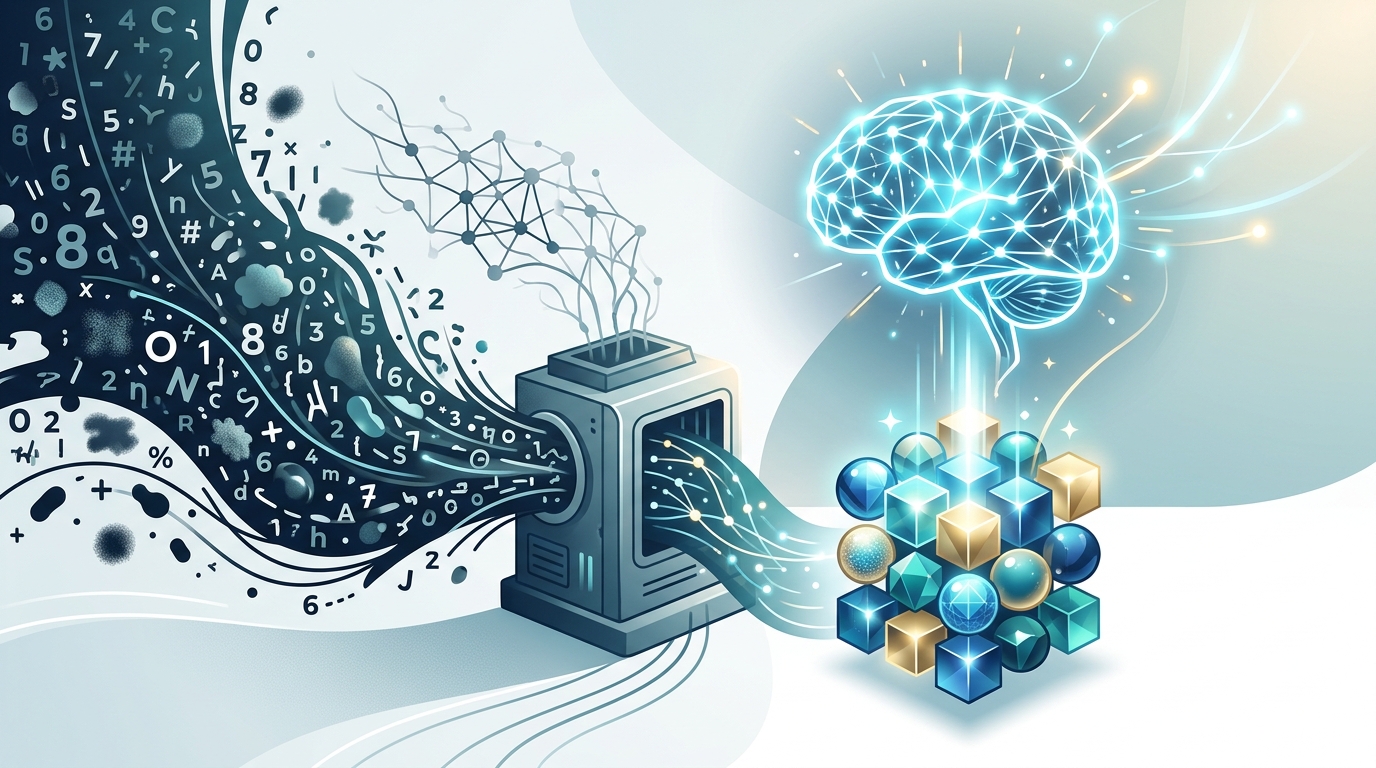
The Mud-Fueled Ferrari: Why Infrastructure Isn't Everything
Imagine giving a Michelin-starred chef spoiled meat and wilted vegetables, then expecting a masterpiece. Or imagine filling a brand-new Ferrari with sludge instead of high-octane fuel. It sounds absurd, right? Yet, this is exactly what many software developers and data scientists do daily: they attempt to train state-of-the-art neural networks with noisy, low-quality data.
For the last decade, the AI world has been obsessed with models. We competed over parameter counts and complex code. But there is a fundamental flaw: you cannot build a cathedral on a foundation of sand. Data-centric AI development (Data-Centric AI) flips this perspective. Instead of endlessly refining the code, we focus on the fuel itself: the data.
Why 80% of AI Projects Fail
Statistics in the field are sobering. Most corporate AI projects never make it to production. Why? Because developers fall into the model-centric trap. They spend weeks fine-tuning hyperparameters—pre-set values that govern model behavior—while their datasets remain riddled with duplicates, incorrect labels, and irrelevant noise.
Andrew Ng, a pioneer in the AI space, demonstrated this through a specific experiment. In a steel defect detection system, refining the code yielded a 0% improvement. However, systematically cleaning and improving the data resulted in a 16.9% increase in accuracy. That is the difference between profit and loss. It is ironic that we often look for solutions in the most complex places instead of the most effective ones.
The essence of a data-centric approach is improving data systematically and programmatically. If a model fails on a specific type of image, we don't rewrite the algorithm; we identify the misleading examples in the training set and correct them.
The Cost of Noise: When Big Data Becomes Your Enemy
For years, we believed that more data was always better—the myth of "Big Data." In reality, excessive low-quality data creates "noise" (errors or irrelevant info). If you have a thousand poorly labeled images, your model will simply become more confident in its mistakes.
Consider this: if you feed a self-driving car 10,000 hours of footage from sunny California but not a single minute of a foggy London evening, how will it perform in a November storm? Despite the massive volume, it lacks quality and relevance. Data-centric AI prioritizes variability and purity over sheer volume.
We apply this same philosophy to visual content. For instance, at media.isi.studio, the models powering our AI image and video generation achieve stunning results because the training data undergoes extreme filtering and curation at ISI Studio. If the input is pure, the output is art.
How to Shift Your Strategy in Practice
Transitioning to a data-centric approach doesn't require a million-dollar investment—it requires discipline and a workflow often called MLOps (Machine Learning Operations). Here are the key steps:
- Prioritize Error Analysis: Don't just look at accuracy percentages. Examine exactly which samples the machine gets wrong. Is there a pattern?
- Label Consistency: If three people label the same data differently, the machine gets confused. Establish strict labeling guidelines.
- Data Augmentation: This involves creating new data from existing samples (e.g., rotating images, adding synthetic noise) to build model resilience.
- Leveraging Synthetic Data: Sometimes reality doesn't provide enough examples. This is where AI technologies offered by media.isi.studio excel: if you lack images of a specific scenario, you can generate photorealistic synthetic variations to train your model.
A Contrarian View: Raising AI vs. Programming It
Here is a thought that challenges traditional engineering: AI development today is closer to pedagogy than classic programming. We used to tell the machine: "if you see X, do Y." Today we say: "here are 100,000 examples, figure it out yourself."
In this framework, the developer is no longer an architect, but a teacher. A good teacher doesn't just dump books in front of a student; they provide curated, clear, and accurate material. If the material (the data) is flawed, the student (the AI) will be too. Data-centric AI is the triumph of empathy and attention over raw computing power.
The Bottom Line: What is the Real Cost?
Many fear that manual data cleaning is too slow or expensive. In reality, fixing a broken model, managing customer complaints, and market failure are far costlier. Techniques like Active Learning—where the model identifies which data points would be most beneficial to label—drastically reduce labor hours. Fewer, better data points mean faster training and lower infrastructure costs at ISI Media Labor.
The Future: Generative AI and Data Feedback Loops
The future belongs to models that can assist in their own instruction. We are seeing systems where one AI monitors another, flagging when data quality degrades. This is known as Data Monitoring.
If you want to harness the power of modern AI without getting lost in algorithmic complexity, use platforms that prioritize quality. With media.isi.studio, creative professionals can access high-end visual generative tools without needing a PhD in data science. The hard part—the data-centric optimization—has already been done for you.
Final thought: Are you polishing your code, or the raw material of the future? Don't be afraid to step back from the algorithms and look into the "soul" of your data. You might be surprised at what you find.
Glossary
- Data Augmentation
- Modifying existing data (e.g., distortion, zooming) to create more training material.
- Active Learning
- A machine learning method where the algorithm selects the most informative data for further labeling.
- Labeling
- The process of identifying data (e.g., drawing a box around a car) so the machine knows what it is seeing.
- Hyperparameter
- Settings for a machine learning model that are fixed before training begins.
- MLOps
- The intersection of machine learning and software operations, aimed at efficient model development and maintenance.
- Neural Network
- A software structure mimicking the function of neurons in the human brain.
- Synthetic Data
- Artificially generated datasets that mimic real-world data properties without being direct measurements.
- Training Set
- The portion of data used directly by the model during the learning process.
- Noise
- Random errors or irrelevant information in a dataset that makes pattern recognition difficult.