Mastering FLUX.1 LoRA: The Era of AI Digital Twins
FLUX.1 LoRA Finetuning Guide: Create AI digital twins and automate high-end content. Discover the future of generative AI with ISI Studio. Scale your brand now.
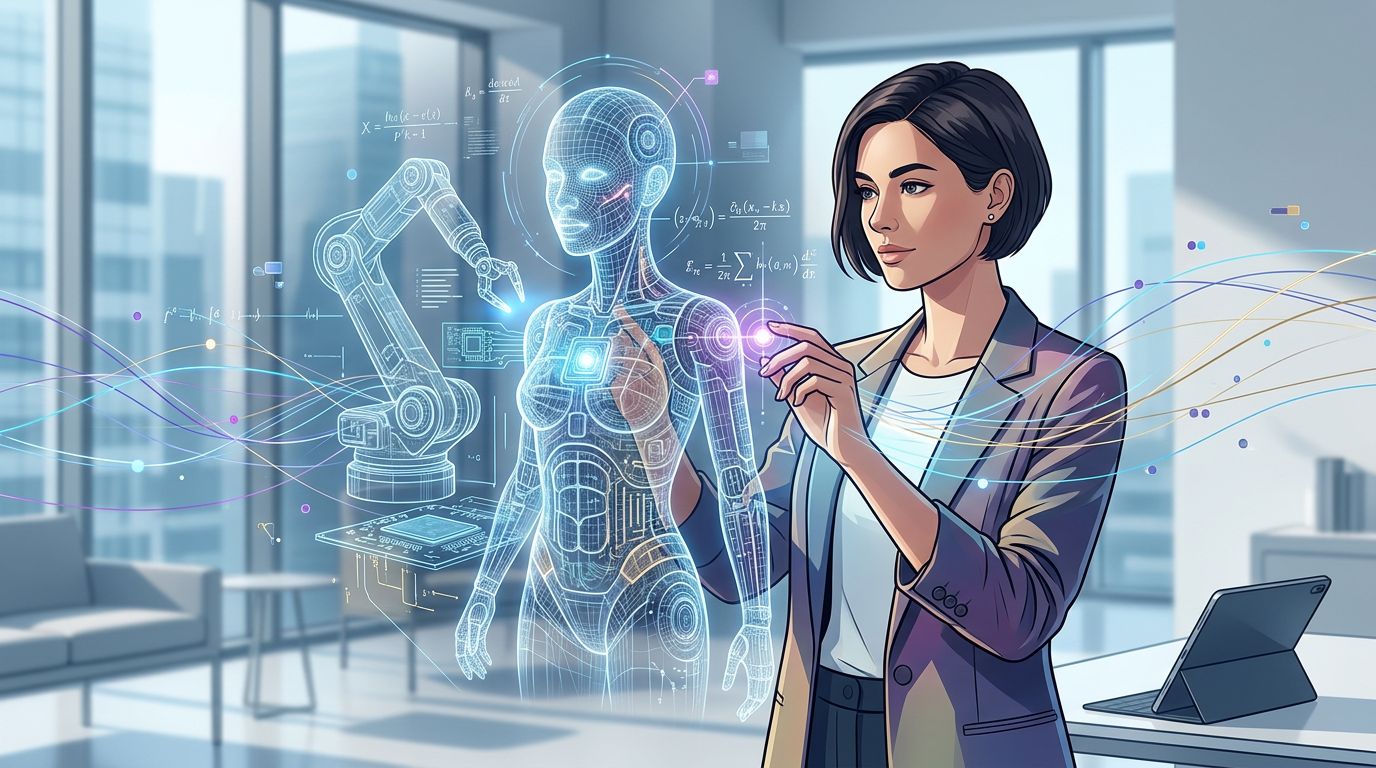
The Moment Pixels Became Flesh and Blood
Forget the six-fingered hands, the waxy skin textures, and that vacant, uncanny stare that used to give away AI-generated images. The rules of the game changed overnight. When Black Forest Labs released the FLUX.1 model, they didn't just drop another piece of software; they handed us the keys to digital immortality. Imagine a world where an influencer never has to board a plane for a photoshoot in the Maldives, yet still publishes a hundred perfect, consistent, and authentic posts daily. This isn't a distant sci-fi future—it is the reality of the FLUX.1 LoRA Finetuning ecosystem.
Why is this the breakthrough moment? The answer lies in openness. While Midjourney remains a walled garden, FLUX.1 has disrupted the market by embracing community-driven fine-tuning. This is where LoRA (Low-Rank Adaptation) comes in, acting as a "personality module." You don’t need to retrain a multi-billion parameter monster from scratch; you simply apply a thin, specialized layer that teaches the model your face, your dog’s unique features, or a specific brand aesthetic. The result? Photorealism that leaves professional photographers questioning their craft.
Why FLUX.1 is the Holy Grail for Content Creators
For years, the biggest hurdle in generative art was character consistency. Have you ever tried to generate the same face in ten different settings? It was a mission impossible—the nose shape, eye color, or jawline would inevitably shift. FLUX.1, however, possesses an internal understanding of anatomy and prompt adherence that makes previous models look like finger painting. When combined with custom AI model training, we achieve the Digital Twin.
Consider the logistics: for a content agency, the biggest costs are time and production. Renting a studio, hiring stylists, and setting up lighting are becoming relics of the past. Modern influencer agencies are now pivoting to AI Digital Twin services. After one comprehensive photoshoot—producing roughly 20-30 high-quality reference images—they create a specific LoRA file. From that point on, the model "owns" that individual’s likeness. They can be placed in any outfit, any environment, at any time. Those who fail to integrate this technology aren't just falling behind; they are exiting the race. Platforms like media.isi.studio are leading this charge, providing the tools necessary to bridge the gap between imagination and execution.
The Technical Core: It’s Math, Not Magic
A common question is: why not just use a simple face swap? Because face swapping is just a mask. During LoRA finetuning, the model actually learns the nuances of a subject: the texture of the skin, the depth of smile lines, the way hair falls. The soul of the process is the dataset. Garbage in, garbage out. The secret lies in diversity: varied lighting, close-ups, wide shots, and a range of facial expressions are essential.
While you don't need a supercomputer for implementation, a high-end GPU (Graphics Processing Unit) is indispensable. The community favorite is ComfyUI, a node-based graphical interface that allows for the visual construction of generation pipelines. This modularity allows creators to push FLUX.1 to its limits. A well-designed workflow can automatically generate captions, render the image, and perform high-end post-processing in one go.
The Business Model: Monetizing Digital Reality
The FLUX.1 LoRA ecosystem is more than a hobby—it’s a gold mine. Here are several business models being deployed globally today:
- Bespoke AI Avatar Agencies: Creating professional LoRA models for CEOs, influencers, or public figures. Maintaining and updating these models to fit new trends is a high-value subscription service.
- Virtual Fashion Photography: Apparel brands no longer need to ship samples and fly models across the globe. By using fabric patterns and a trained AI model, costs drop by 90% while speed-to-market increases tenfold.
- Stock Photo Revolution: Why pay for generic imagery that thousands of other sites use? Generate exclusive, brand-specific visual worlds using media.isi.studio tools where consistency is guaranteed.
Some call this the "end of reality." I prefer to call it the democratization of creativity. Capital for film crews no longer dictates success; instead, it's about who has the better idea and who masters the tools. A "one-person army" can now deliver the output of a full-scale media agency.
The Secret Ingredient: Community and Platforms
The success of FLUX.1 is inseparable from the communities on Reddit, Product Hunt, and X (Twitter). This is where the next "hit" LoRA is discovered and where developers share optimization settings to avoid "overfitting"—the point where an AI can only copy a photo rather than create something new. The acceleration of knowledge sharing here is unprecedented.
How far can we go? Given the current trajectory, AI video generation is the next frontier. FLUX.1 images are already so lifelike they can often only be identified via metadata or specialized AI detectors. But for marketers, if the result achieves the KPI, the distinction is academic. For artists, it's a new medium for self-expression.
The Challenge: Ethics and Digital Ownership
We cannot ignore the legal frontier. If anyone can create a digital twin of me, who owns my likeness? This legal gray area is currently the "Wild West." However, pioneers aren't waiting for regulation. They are building the future where content automation is a prerequisite for survival. Professionals know that the best defense is proactivity: building your own controlled digital presence with AI assistance.
If you are ready to start, don't get bogged down in complex code. Use integrated platforms that handle the technical heavy lifting. The media.isi.studio platform was designed specifically for this purpose: to serve as a bridge between complex technology and commercial needs. Whether it's high-end imagery or video content, the goal is to reach a level where AI is no longer just a tool, but an invisible, brilliant collaborator.
Closing Thoughts on the Future
FLUX.1 LoRA Finetuning is not a passing trend. It is the foundation of a new digital economy. Those who learn to prompt and fine-tune these models today are learning the language of the future. Do not fear the technology; leverage the fact that we are still at the beginning. Create your digital twin, automate your content pipeline, and refocus your energy on what truly matters: human creativity and strategic vision.
Glossary
- FLUX.1
- The state-of-the-art open-weights image generation model developed by Black Forest Labs.
- LoRA (Low-Rank Adaptation)
- An efficient technique for fine-tuning large models using a small, specialized dataset.
- Finetuning
- The process of taking a pre-trained model and training it further for a specific task or style.
- Digital Twin
- A high-fidelity digital replica of a physical person or object that can be consistently reproduced.
- ComfyUI
- A popular node-based GUI for running Stable Diffusion and FLUX models with modular workflows.
- Prompt
- The textual instruction used to guide the AI toward a specific output.
- Inference
- The process where a trained model generates an actual output (image or text) based on input.
- Dataset
- A structured collection of data (e.g., curated photos) used for AI training.
- Epoch
- One full cycle through the entire training dataset during the fine-tuning process.