Google AI Overviews: SEO Strategies for the Zero-Click Era
Master Google AI Overviews (AIO) optimization. Learn how to rank in AI boxes, boost E-E-A-T, and recover traffic in the zero-click era. Read the full guide!
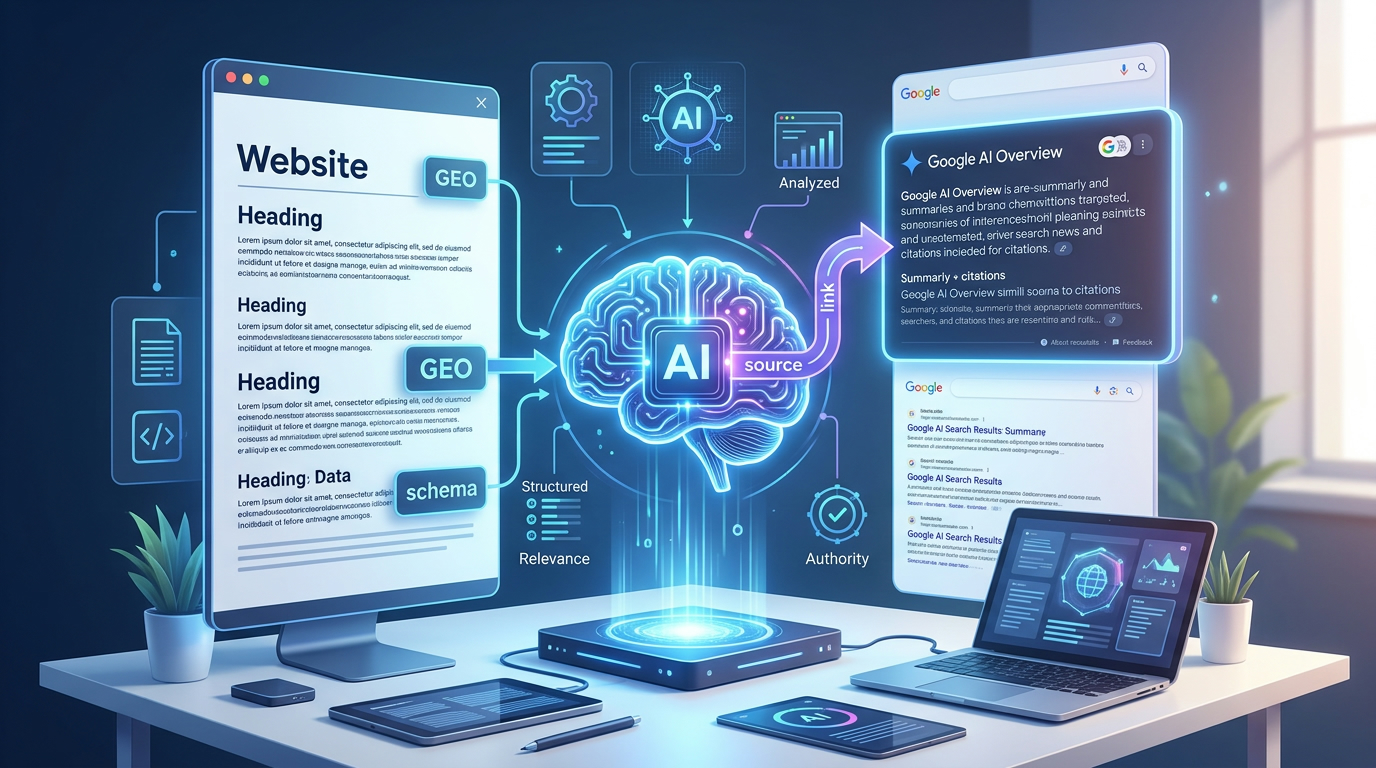
The Death of Traditional Search: Why AI is Rewriting the Rules
Imagine building a digital presence for fifteen years, only to wake up and find that Google has placed a massive, AI-powered wall between your content and your audience. This isn't a dystopian scenario; it is the reality of AI Overviews (formerly SGE). As zero-click searches rise, traditional click-through rates are under pressure. However, panic is not a strategy. While zero-click content—where Google provides the answer directly on the results page—is changing the landscape, the brands featured as sources within these AI boxes are gaining unprecedented authority and trust capital.
A decade ago, the goal was the first page. Five years ago, it was the top three. Today? The challenge is to be chosen by Google’s algorithm as its primary narrator. Being in the AI Overview box identifies you as the definitive expert. Those who aren't are relegated to the 'ten blue links' below the fold. But how do you become the chosen source?
The Cost of Attention: Why 'Good' Content No Longer Wins
The old golden rule of content marketing—writing long, keyword-stuffed articles—is dead. Google’s AI doesn't just read; it interprets. LLMs (Large Language Models like Gemini) don't hunt for keywords; they map relationships between entities (identifiable concepts, people, or objects). If your article is just another generic '10 tips' list, the AI will digest it, summarize it in three bullet points, and the user will never need to visit your site.
The key to survival is Information Gain—the unique value or data your content adds to the existing web of knowledge. If you aren't providing insights that a standard chatbot can generate in five seconds, you are shouting into the void. AI Overviews prioritize sources that offer proprietary data, firsthand experience, or high-level expert perspectives that aren't found on every other blog.
Structure is the New King
AI rewards organization. NLP (Natural Language Processing) algorithms find structured, modular text much easier to parse. Use concise paragraphs and place your answers directly under subheadings. If a user asks 'How to...', your answer should lead with a structured list. This is what we call 'AI-friendly formatting'.
The Visual Explosion: Images That AI Understands
Google isn't just looking at text; AI Overviews are increasingly multimodal. For complex queries, Google serves images and videos alongside text summaries. This is where the visual content revolution begins. Generic stock photography is no longer enough. You need unique, contextually relevant visual assets. Many creators struggle with the budget or time for custom photography, which is where platforms like media.isi.studio come in. By leveraging AI-driven visual tools, you can create unique assets that help Google recognize your content as a premium reference point.
When an AI sees an article supported by custom infographics and relevant video summaries, it is significantly more likely to flag it as a 'high-quality source' compared to a wall of plain text. Visual SEO is no longer just about alt tags; it’s about contextual relevance and authority.
Deep-Diving into Search Intent
Historically, we categorized search into informational, navigational, and transactional. AI Overviews are effectively capturing the 'informational' segment (e.g., 'What is photosynthesis?'). If your traffic relies on basic definitions, your strategy needs to evolve toward deeper Search Intent.
Users now seek nuance: comparisons, personal evaluations, and expert solutions. While AI can list 'the best coffee machines', users still crave the 'Why' behind a recommendation—the human element. Optimization must now focus on E-E-A-T (Experience, Expertise, Authoritativeness, Trustworthiness):
- Experience: Show that you have actually used the product or service.
- Expertise: Provide technical depth that goes beyond the surface level.
- Authoritativeness: Build a profile that other experts cite.
- Trustworthiness: Maintain transparent sources and clear editorial standards.
The Era of AIO-Specific Strategy
We are entering a phase where companies need dedicated AI Overview optimization. This isn't just about backlinks; it’s a hybrid discipline involving data science, linguistics, and marketing. Success requires understanding RAG (Retrieval-Augmented Generation) processes—knowing how Google 'feeds' your data into its generative responses.
At media.isi.studio, we are seeing this shift firsthand. Clients are no longer just asking for articles; they want a digital ecosystem that AI prefers. Whether it's AI-generated videos that explain complex workflows or structured datasets that search engines can easily digest, the future belongs to the symbiosis of technology and human creativity.
Measuring Success Beyond the Click
The transition is painful. As users get answers in the AI box, your CTR (Click-Through Rate) in Search Console may dip. Does this mean failure? No. Your brand appearing as a cited source is the modern 'digital billboard'. New KPIs will focus on Impression Share within AI boxes and the growth of direct brand searches. If the AI recommends you, users remember you, and they will eventually seek you out directly.
Practical Steps for Future-Proof Traffic
- Implement Advanced Schema: Schema.org structured data is mandatory. Explicitly tell Google what is a FAQ, a recipe, or an author profile.
- Target 'People Also Ask': These queries are the waiting room for AI Overviews. If you can answer these, you are a prime candidate for the AIO box.
- Embrace Radical Honesty: AI can detect marketing fluff. If a product has flaws, mention them. Authenticity is what both algorithms and humans value most.
- Keep Content Fresh: Outdated info is the enemy of AI. If your data is a year old, you will lose your featured spot.
AI is not the enemy; it is a filter. It filters out noise, laziness, and mediocrity. Those who create genuine value and utilize modern tools—like the creative solutions at media.isi.studio—will not just survive the Google AI era; they will define it. Are you ready to level up, or will you wait for the wall to close in?
Glossary
- AI Overviews / SGE
- Google’s AI-generated summaries displayed at the top of search results.
- Zero-click content
- Content that provides a full answer within the search engine, removing the need for a user to click through.
- LLM
- Large Language Model; the core technology behind AI's ability to understand and generate text.
- NLP
- Natural Language Processing; the ability of AI to interpret human language contextually.
- Information Gain
- The unique value or new information an article adds compared to existing sources.
- E-E-A-T
- Google’s quality framework: Experience, Expertise, Authoritativeness, and Trustworthiness.
- CTR
- Click-Through Rate; the percentage of users who click a link after seeing it.
- Search Intent
- The underlying goal of a user's search query (Informational, Transactional, etc.).
- RAG
- Retrieval-Augmented Generation; a technique where AI uses external data to provide more accurate answers.
- Schema.org
- Standardized tags used to provide search engines with structured information about a page.